Now that the summer break is coming to an end, and Catalans are returning to the capital, venues across the city will be opening their doors to the public again, and offering boppers a considerable variety of music to dance away the night to. September is usually a little slow, and this year is no different, but there are some class acts on the way, with plenty to choose from.
Sala Razzmatazz will host Swedish indie-pop specialists The Radio Dept., as well as Italian goth-metal pioneers Lacuna Coil, and the wonderfully talented Scottish singer-songwriter Amy MacDonald. Here’s a wee taster of Amy’s talents.
In Sala Apollo, there are only two non-local bands visiting in September, but what is missing in numbers is more than made up in quality. First up are the mighty Tokyo Ska Paradise Orchestra - they do exactly what they say on the tin! TSPO gigs are always lively affairs, they have a large following here in Barcelona, and visit at least once a year, so if you’re thinking of getting along there make sure you get your ticket early. The other visitors to the Apollo will be Seattle grunge masters Mudhoney, who’s “Touch Me, I’m Sick” remains one of the highest points in that genre. As that song is so famous, I’ve plumped for a TSPO video instead (of course I wasn’t influenced by the two cute Japanese girls guesting on vocals….).
At Sala Bikini, the choices are even more eclectic. From Ireland come VNV Nation, two lads who have been making electronic dance music, and more recently synthpop, since the mid ’90s. Their gigs are pure energy, and a real bonus for dance music lovers. Next up are The Whitest Boy Alive, a band from Berlin that defy categorization, although they do remind me a little of Sparklehorse, or even of the very, very early REM. They make beautiful music, and would be my choice if I had to pick just one gig this month. The Eels are the last visitors to play Bikini, and are deservedly famous for their “Novocaine for the Soul” single, which was one of the best songs of the nineties in my humble opinion. I’d still choose to see TWBA, only because I’ve been lucky enough to see The Eels twice, and have never caught The Whitest Boy Alive yet.
Finally, a mention to the three major acts to play Barcelona in September. From New York come heavy metal stalwarts Manowar. Has it really been over 30 years since they formed? Manowar have managed to get into the Guinness Book of Records in 1984 for “loudest performance”, a record they have broken twice since then! The inexplicably popular Limp Bizkit also return to the city, and finally Supertramp, a band formed in 1969, play. These last three concerts are in Palau Sant Jordi.
September sees the beginning of the new season at El Gran Teatre del Liceu, with two operas to enjoy. The first opera to be performed will be Iphigenie auf Tauris by Christoph Willibald Gluck. This is the second version of Gluck’s masterpiece, and its first performance in Spain. The production to be staged is by the world famous choreographer Pina Bausch, with Tanztheater Wuppertal, and will be conducted by Jan Michael Horstman. Forty-five minutes prior to each performance, there will be an information session about the opera in the Foyer, open to all members of the audience. You can see this opera on the 4th, 5th, 6th, and 7th of September.
The second opera that will be performed in September is the very popular Carmen by Georges Bizet. There will be two performances in September, on the 27th and on the 30th. This new production, directed by Calixto Bieito, is based on the one he created for the Peralada Festival, and will be conducted by Marc Piollet, with the Symphony Orchestra and Chorus of the Gran Teatre del Liceu.
The draw was made today for the group stages of the 2010-11 Champions League, with Barça being drawn in Group D, and once again having to play FC Rubin Kazan. Last year, on October 29th to be precise, the team from Kazan in the Tatarstan Republic beat the blaugranas 0-1 in Camp Nou, and managed to hold them to a 0-0 draw back at home. Barcelona will be seeking revenge, but will be wary enough of their Russian opponents: Rubin Kazan are the current champions of the Russian Premier League, having won the title two years running. I could be wrong, but I believe they are also the furthest easternmost team playing in this year’s Champions League.
FC Barcelona’s other opponents are Panathinaikos and FC Copenhagen. The Greek side have traditionally been weak in the CL, although they did manage to finish runners-up back in 1971 when the competition was known as the European Cup. Copenhagen should pose no real threat to the Spanish champions, and should they fail to win the group the entire bookmaking profession might as well retire. That said, it’s worth noting that all 4 teams in this group are the champions of their countries, the only group to feature 4 champions!
Barça will begin their campaign with a home game against Panathinaikos on Tuesday the 14th of September. Their next home game is against FC Copenhagen on Wednesday the 20th of October, and they finish the group stage with at home against Rubin Kazan on Tuesday the 7th of December.
The other groups line up as follows:
Group A: Inter Milan, Werder Bremen, Tottenham Hotspur, FC Twente Group B: Lyon, Benfica, Schalke, Hapoel Tel-Aviv Group C: Manchester United, Valencia, Rangers, Bursaspor Group E: Bayern Munich, Roma, Basle, Cluj Group F: Chelsea, Marseille, Spartak Moscow, MSK Zilina Group G: AC Milan, Real Madrid, Ajax, Auxerre Group H: Arsenal, Shakhtar Donetsk, FC Braga, Partizan Belgrade
Of these, perhaps the only one of any real interest is Group A. Inter are the current holders, but they have lost Mourinho as manager. Rafa Benitez has some form in the CL, winning it with Liverpool, but there’s little doubt as to which manager is the more tactically astute. Tottenham have an excellent side, and it will be interesting to see how they fare against Werder Bremen and Inter. As for the other groups, it’s hard to see them panning out in any other way than how they were seeded. Group G looks interesting on paper, but I can’t see either Ajax or Auxerre pulling off away from home shocks against AC or Real Madrid. However, this is the Champions League, and every year there are some shock results, and some teams do manage to exceed all expectations. Let’s hope that’s true again.
As anyone living in Barcelona knows, one of the biggest attractions in the city is the football club, FC Barcelona. Every year tens of thousands of visitors visit the stadium, Camp Nou, to take the tour, and every year almost as many visitors attend the home games there. However, almost as many never make it in as tickets for the games can be very hard to get. For the match they call El Clásico, or El Derbi, between Barça and Real Madrid, getting a ticket is virtually impossible - unless you are very wealthy indeed. It definitely pays to plan ahead if you want to see the blaugranas play, especially for the bigger games like the derby with Espanyol, and those against the neighboring sides from Valencia, Villarreal, and Levante. Games against Sevilla and Atlético also sell out well in advance.
With this in mind, we’ve decided to print the full list of home fixtures for the club for the coming La Liga season, which begins on the 29th of August. Barça start their campaign with an away game, so their first match in Camp Nou isn’t until the weekend of September 11th and 12th. In La Liga, the schedule tends to be vague, or flexible if you wish, and matches are listed as being played sometime over a particular weekend. As the game nears the day, and time, is fixed. Most games in La Liga are played in the evening, with 10pm kick offs not being unusual.
September 2010
11/12 : Barcelona v Hércules
21-23 : Barcelona v Sporting Gijón
October 2010
02/03 : Barcelona v Mallorca
16/17 : Barcelona v Valencia
30/31 : Barcelona v Sevilla
November 2010
13/14 : Barcelona v Villarreal
27/28 : Barcelona v Real Madrid
December 2010
11/12 : Barcelona v Real Sociedad
January 2011
01/02 : Barcelona v Levante
15/16 : Barcelona v Málaga
22/23 : Barcelona v Racing Santander
February 2011
05/06 : Barcelona v Atlético Madrid
19/20 : Barcelona v Athletic Bilbao
March 2011
05/06 : Barcelona v Zaragoza
19/20 : Barcelona v Getafe
April 2011
09/10 : Barcelona v Almería
23/24 : Barcelona v Osasuna
May 2011
07/08 : Barcelona v RCD Espanyol
14/15 : Barcelona v Deportivo La Coruña
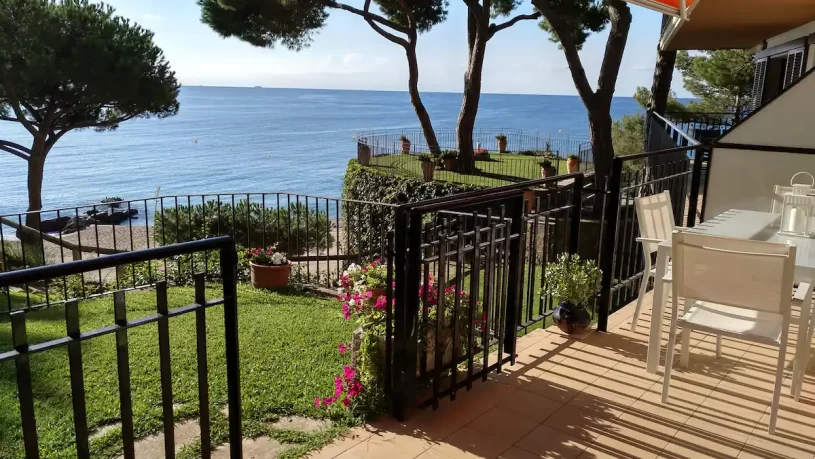
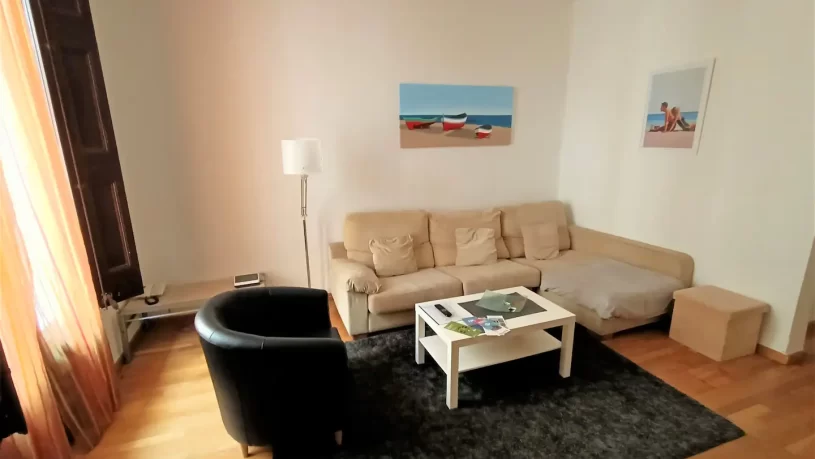
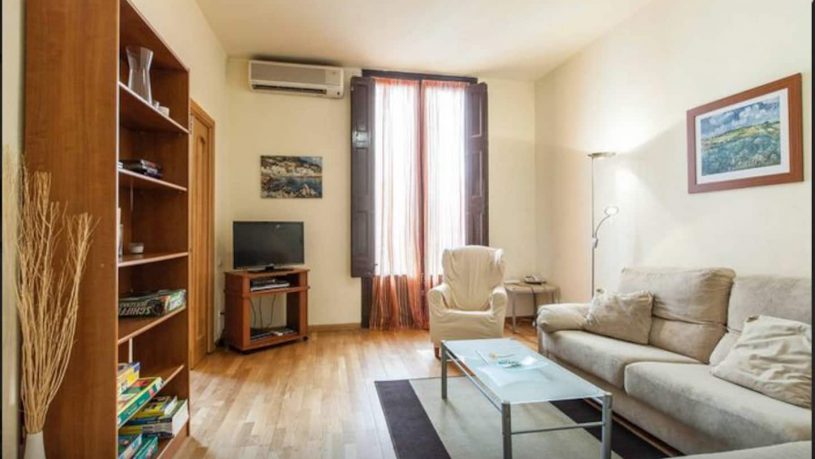
Athome Barcelona Apartments offer the perfect choice in accommodation if you are planning a visit to the city to see Barça play (or for any other reason!). Our range of apartments in Barcelona are all conveniently located, with public transport, shopping facilities, restaurants and bars all nearby. Getting to and from the games is easy, and our Barcelona apartments allow you complete freedom to enjoy your stay with the minimum of fuss. Athome Barcelona Apartments have a wide range of rental flats that can accommodate couples or large groups, and everything in between. Our rates are competitive, and our rental flats in Barcelona have all the modern conveniences you would expect from a market leader. So, if you are thinking of visiting Barcelona and going to see Barça play at home in Camp Nou, be sure to check out our special offers for Barcelona Apartments.
Barça’s football season begins today when they travel to Seville to play the first leg of the Spanish Super Cup, a two-legged affair that pits the La Liga champions against the winners of La Copa del Rey. Sevilla will looking for revenge as Barça doubled them last year, beating them 2-3 at the Estadio Ramón Sánchez Pizjuán, and trouncing the andalusians 4-0 in Camp Nou. The return leg will be played in Barcelona next Saturday, the 21st.
Following that game, on Wednesday 25th in Camp Nou, Barça will face Inter Milan in the annual Gamper competition, where the Spanish champions play the Italian champions. There is a lot of pride involved in this game - for years Italians were able to claim their football teams were better, and could point to the World Cup to prove the point. Not so this year, the Italians went home from South Africa early, and wouldn’t have been too happy to see Spain, with a predominantly Catalan team, lift the World Cup Trophy after defeating Holland in a mean-spirited final.
Barça will also be looking for a spot of revenge, with last season’s semi final loss to Inter in the Champions League still fresh on their minds. Unfortunately, winning won’t be quite enough to erase that memory, as the architect of their downfall, José Mourinho, is no longer manager of the club, having left for Real Madrid, and been replaced by Rafa Benitéz.
Espanyol get their season underway with a home game against Getafe in La Liga on the 29th. Last season should have been one of renewed hope and expectation as they moved into their new home, Estadi Cornellà-El Prat, but it was sadly overshadowed by the tragic death of their club captain, Daniel Jarque, who died during a pre-season training camp in Italy. Pericos (Espanyol fans) must have have been moved during the World Cup final, when his close friend, and FC Barcelona midfield genius, Andrés Iniesta celebrated his match-winning goal by discarding his jersey to reveal a tee-shirt with the words “Dani Jarque siempre con nosotros” (Dani Jarque, always with us). This Perico certainly was.
Two weeks to go! August 29th sees the start of the 80th La Liga campaign, with the trophy expected to once again be fought over by FC Barcelona and Real Madrid CF. Before previewing the coming season I’d like to look back at last season, one of the closest fought battles for the title in recent memory.
Barça finished as champions, ending the season with a record breaking 99 points, just 3 points ahead of their arch rivals from the capital. On their way to clinching the title they scored 98 goals (Madrid managed an incredible 102!), and lost just one game, to Atlético. Real Madrid won 18 of their last 19 games going into the final match of the season – unfortunately for them that loss was to Barcelona. They were the only two teams in it, to be honest; Valencia, who finished in 3rd, were 28 points behind the champions! To put that in perspective, it’s the same points difference that separated Getafe who finished a credible 6th, and won a place in Europe, from Xerez, who finished bottom of table. Getafe also have the distinction of being the only team other than the “Big Two” to have led the league at any point – which they did after the first round of games. Thereafter, either Barça or Madrid topped the league, with Valencia taking hold of 3rd from week 16 until the end.
In addition to winning the league, Barça also won the UEFA Super Cup, the FIFA World Club Cup, and the Supercopa de España. Yet their fans will remember none of those quite so clearly as their defeat to Mourinho’s Inter, a manager who served his managerial apprenticeship, as it were, initially under the late, and much missed, Bobby Robson, and then under van Gaal, from 1996 to 2000 in Barcelona. And who has now taken the reins at Real Madrid.
At the other end of the table it was almost as predictable. Xerez entered the relegation zone after just the third round of games, and were bottom from the 12th round on. Tenerife joined them there after the 18th round, and never left the zone thereafter, and things were little better for Valladolid, who moved into the zone after round 21. They escaped just once, after the penultimate round, but Racing Santander and Malaga managed to survive on the final day by picking up points against Sporting Gijón and Real Madrid respectively. They have the dubious distinction of surviving with the lowest points total since the introduction of three points for a win. For Tenerife and Xerez, the return was an immediate one, they had only been promoted the season before; for Valladolid, the return marked an end to a three year tenure in Spain’s top flight.
Their places have been filled by Segunda División champions Real Sociedad, from San Sebastian, runners-up Hércules CF from Alicante, and Levante UD from Valencia. For Hércules, their return marks the end of a thirteen year absence from the top flight, while Real Sociedad return after three years of second division football, and Levante two years.
This season will see 6 new managers in La Liga; Mallorca, Real Madrid, and Malaga have all hired new managers, in Michael Laudrup, José Mourinho, and Jesualdo Ferreira; while new boys Real Sociedad are managed by Martín Lasarte, Hércules by Esteban Vigo, and Levante by Luis García Plaza. Of these, only Laudrup has experience of first team management in the Spanish top flight; he led Getafe in 2007-08, taking them to the final of the Copa del Rey, where they lost to Valencia, and to the quarter finals of the UEFA Cup, where they were beaten in extra time by Bayern Munich.
However, all attention will be focused on José Mourinho, as he tries to achieve something that Manuel Pellegrini could not – win a competition. Despite Real Madrid finishing on a club record of 96 points, and Pellegrini being the clubs’ most successful manager in terms of total percentage of wins (75%, with 36 wins in 48 games), he was sacked at the end of last season, when Madrid failed to win any silverware, and were knocked out of the Champions League at the last 16, for the 6th time in a row. There can be no denying Mourinho’s flair for winning; in his two years at Porto he won 2 league titles, and the Champions League, in three years at Chelsea he won 2 titles, and in two years at Inter he repeated his Porto feat by winning back to back titles and the Champions League. And that’s not counting domestic cups.
Real Madrid have already signed Carvalho from Chelsea, midfielders Khedira and Leon from Stuttgart and Getafe respectively, and forwards di Maria from Benfica and Canales from Racing. Club legend Raul has been allowed to leave, as has influential midfielder Guti.
By comparison, Barcelona have been quiet in the transfer market, with only David Villa arriving from Valencia, and Adriano Correia arriving from Sevilla. Mexican defender Marquez has left, despite an impressive World Cup campaign, as has Thierry Henry, after a totally unremarkable World Cup campaign. Despite endless speculation in the press, and the very best efforts of Iniesta to unsettle him, Cesc Febregas remains an Arsenal player – for the moment.
Of the challengers, by which I mean those teams likely to be fighting it out for 3rd place, Valencia seem to have invested their fee for Villa quite well, bringing in forward Aritz Aduriz from Mallorca, Argentinean midfielder Alberto Costa from Montpellier, forward Roberto Soldado from Getafe, French midfielder Sofiane Feghouli on a free transfer from Grenoble, Portuguese defender Ricardo Costa on a free transfer from Lille, and Turkish midfielder Mehmet Topal from Galatasaray.
Sevilla have also strenghtened their squad, with the arrivals of Luca Cigarini on loan from Napoli, Mouhanadou Dabo from Saint Etienne, and Tiberio Guarenta from Atalanta, and should mount the biggest challenge to Valencia for the third spot.
It’s hard to not feel sorry for Mallorca. They finished 5th in the league last season on the back of very impressive home form, and were never lower than 6th, yet will not feature in European competition as the club went into administration. Their only acquisition for the upcoming campaign is Canadian midfielder Jonathan de Guzman, who joins on a free transfer from Feyenoord. They were the surprise package of 2009-10, but considering their internal troubles it is hard to see them repeating the feat, and they could even find themselves struggling just above the drop zone. However, their new manager, Michael Laudrup, has plenty of experience in La Liga, having played for both Barça and Real Madrid, and during his brief tenure as manager at Getafe his team’s style of attacking football was much praised.
Getafe finished a credible 6th last time out, not bad for the capital’s 3rd club, and have brought in a batch of new players to help their European ambitions. These are: Forward Adrian Colunga from Recreativo Huelva; Midfielder David Gamiz from Alicante; Midfielder Pedro Mosquera from Real Madrid Castilla; Forward Angel Javier Arizmendi from Zaragoza; Defender Ivan Marcano from Villarreal; Midfielder Borja Fernandez from Valladolid.
Villareal will also enjoy some European football this season, thanks to Mallorca’s bad fortune, but with only the additions of defender Carlos Marchena from Valencia, and midfielder Borja Valero on loan from West Brom to bolster a relatively small squad, it is unlikely that the submariners will be putting up too much of a challenge.
Athletic Bilbao finished in 8th place last season, their best since 2003-04, and have bolstered their squad with the additions of goalkeeper Aitor from Baskonia, midfielder Igor Martinez from Alaves and forward Ibai Gomez from Sestao River. Always a difficult side to break down, they should be challenging for a place in Europe by the end of next season, but aren’t real contenders for a CL place.
Atlético Madrid must be one of the luckiest teams in La Liga, although I suspect their fans will strongly contend this point of view. Despite finishing 9th in the league, an incredible 52 points behind the champions, they will get to defend their Europa League title. A title won despite winning just two games between the round of 32 and the final. Along their nervy route to the final they managed to draw 5 games and lose just one, getting through the round of 16, the quarter final, and the semi final on the away goals rule. Forlan was their main source of genius, and indeed he scored the winner in extra time against the unfancied, but plucky, Fulham. As with the beginning of every season, the Atlético fans will be talking about it being their year, and perhaps the addition of impressive Uruguayan defender Diego Godin from Villarreal, as well as Brazilian defender Filipe Luis Kasmirski from Deportivo La Coruna, midfielder Mario Suarez from Mallorca and midfielder Fran Merida from Arsenal might help their chances. However, once again, an awful lot will depend on Diego Forlan.
Deportivo La Coruna ended their campaign in the top half of the table, but they had been fourth at the end of round 17, after which they slowly faded out of contention, so it was a disappointing season over all. They’ve brought in a number of players; Midfielder Ruben Perez from Atletico Madrid B, Cape Verdean defender Stopira from Santa Clara, Uruguayan midfielder Jonathan Urretavizcaya from Benfica, French midfielder Yves Desmarets from Guimaraes, midfielder Saul Fernandez from Elche, forward Michel from Valencia; and midfielder Michel Herrero on loan from Valencia. However, none really stands out, and a top ten finish is probably the best they can hope for in the coming season.
Espanyol had a dreadful season last time out, beginning with the tragic death of club captain Dani Jarque who died on August 8 last year following a heart attack during his team’s pre-season preparations in Coverciano, near Florence. Espanyol fans would have been delighted to see Iniesta display his message of remembrance on his tee shirt when he scored the winning goal in the World Cup final, and to see that the much-loved Jarque was honoured by all the members of the Spanish squad during their celebrations. Perhaps with a year having passed the team can once again make a challenge for a European place. The new additions to their squad are Brazilian defender Mattioni from Mallorca, Argentinean midfielder Jesus Datolo from Napoli, and Portuguese forward Rui Fonte from Sporting.
Of the rest, perhaps the surprise will come from Real Sociedad. The astute signing of Espanyol legend Raul Tamudo will bring a lot of guile, and not a little skill, to an attack already bolstered by the arrival of Joseba Llorente from Villareal, and Paco Sutil will add some steel to their midfield. I can’t see them finishing anywhere near the relegation zone.
One last note: The 2010-11 BBVA La Liga will be contested using a new match ball - the Nike T90 Tracer. Let’s hope it’s better than the Jabulani balloon that was used in the World Cup.
Although the neighbourhood of Gràcia has undergone some gentrification over the last decade or so, it remains Barcelona’s most bohemian of barrios. Streets are narrow and lined with old buildings sporting ornate balconies, and there is an abundance of shaded squares full of café terraces to discover, where you’ll find some of the best of the city’s bars, and most of the city’s ethnic restaurants, not to mention numerous historic churches. It is also home to one of the, if not the, most vibrant and exciting street festivals in Barcelona, with over 600 events held over a period of 9 nights.
Usually, Gràcia is one of the more peaceful Barcelona barrios, situated as it is to the north of the city centre, and away from the usual well-beaten tourist tracks. However, at the end of the second week in August all this changes, and the barrio suddenly bursts into the kind of exhilarating celebration that Catalonians are deservedly famous for.
Festa Major de Gràcia dates back to the beginning of the 19th century, a time when Gràcia was separated from Barcelona by a stretch of green parks and woods. Today, it is one of the biggest fiestas in the city. One of the attractions of the festival is that the residents from 23 streets compete for the prize of best-decorated street, by using just about anything they can lay their hands on, be it cardboard, wood, plastic, etc. Every year the decorations follow a particular theme.
The festival begins in Plaça Rius i Taulet, where a parade of enormous carnival figures pass around and through, and the famous human castles, pyramids of men, women, and even children – castellers – are built. All the streets leading off the Plaça are lined with tables and benches. There are plenty of food stalls, offering a wide variety of snacks and local delicacies, and the bars open their doors to the street. Live music can be enjoyed in any number of places, but the key point for bands performing is Plaça del Sol. Don’t expect the celebrations to end early, it’s quite common to see children enjoying the activities right up until 2am!
The festival ends with the sight of devils racing through the streets letting off fireworks, before the closing ceremony of the incredible “correfoc”!
One of my favourite spots to bring visiting friends and relatives is a small venue called Sala Tarantos, located in Plaça Reial, at number 17. Tarantos is part of the Mas i Mas group of venues, which includes Jamboree next door, and the Moog club across Las Ramblas in the Raval neighborhood. Each venue specialises in one type of music - Jazz & Blues in Jamboree, Electronica in Moog, and Flamenco in Tarantos.
Most of the flamenco shows in Barcelona tend to be of the “tableau” variety, that is they’re long shows, usually with a meal, where all aspects of this wonderful musical genre are displayed. They’re usually quite expensive as well. Not so in Tarantos. This small venue is the perfect introduction to flamenco. The room is quite small, actually cosy is a better word, allowing the audience considerable intimacy with the performers. The shows last a little over 30 minutes, and will feature flamenco guitarists and percussion, singing, and of course flamenco dancing!
The doors open every night around 6pm, with the first show kicking off at 6.30. During the course of the evening there will be six shows, each starting on the half hour, with the last show beginning at 11.30. There are two separate acts every night, with each act giving three performances. Best of all, the entrance fee is a mere 6€! The drinks are also priced reasonably, and when the show is finished you’re in one of the best locations in the city to find a decent restaurant and dine well.
This will be the 6th Busker’s Festival to be held in Barcelona, and every year it seems to attract a more diverse range of musicians from around Europe. This year the venue is the seaside neighborhood of Barceloneta, and so far there are over twenty acts lined up. It’s an unusual musical festival in that there are no stages, which means a greater interaction with the audience. And of course none of the performers are paid to appear, instead they rely on their talents to persuade their audience to drop a few euro into the hat. Everything you need to know can be found at http://www.buskersfestivalbarcelona.org/
Other concerts worth noting, and they are few and far between in Barcelona in August:
The Original Wailers featuring Al Anderson & Junior Marvin will play at Faktoria d’Arts La Rasa in the neighboring town of Terrassa on Thursday the 5th. Doors open at 9.30 and tickets cost 25€ on the night, or 20€ if bought in advance.
On Saturday August 7th at Recinto Ferial de Montjuic you can catch the latest edition of the Barcelona Music Conference. Doors open at 18.00, and the performances begin at 17.00. The artists performing are, as they will appear on the night, Albert Neve, Mart-T, Andy Moor, Above And Beyond, Juanjo Martin, Groove Armada, and Paul Van Dyk.
How much energy have you got? You’ll need plenty if you’re to get the best out of the annual Barcelona Summer Week festival that runs from Thursday the 4th through Saturday the 6th (which means, of course, the morning of Sunday the 7th). Summer Week is one long, long party, hosted in a number of venues across the city, and using seven beaches. The centre of the festival is Palau Sant Jordi, but it accounts for about 30% of the artists playing in the festival. All told, there are over 100 DJs spinning discs, many of them with international reputations, and just about every genre of dance music is represented. The finale this year is set to be spectacular!
The following list of DJs/artists are scheduled to perform at Palau Sant Jordi:
Al muñoz, Amo Navas, Bingo Players, Booka Shade, Daddy’s Groove, Danny Murphy, David Gómez, David Hopperman, David Oleart, David Penn, Dj Puku, DJ Sneak, Erick E, Felix Jr, Ferry Corsten, Frank Morin, Funkerman, Javi Mula, Joan Reyes, Maurizio Gubellini, Maxima FM, Night Max, Noise Up, Pepe Tuccillo, Robbie Rivera, Sergio Perez, Tite, Willie Graff, yall.